Built Through Experience
Riana Porter is a dressage trainer, competitor, and instructor with more than two decades of experience working with horses across every stage of development—from young horses beginning their careers to experienced Grand Prix horses. Her background combines years of riding, training, and competition—including time spent as an auction rider at the Oldenburg auction in Vechta, Germany—with continued education alongside respected trainers, judges, veterinarians, and other professionals throughout the sport.
Before the age of 30, she earned four invitations to the U.S. Dressage Festival of Champions with two horses she developed through the FEI levels, competing three times across the Junior, Young Rider, and Small Tour divisions. She also developed a third horse through Grand Prix, earning her USDF Gold Medal.
Today, that depth of experience shapes an approach centered on correct development, thoughtful training, and giving both horse and rider the tools to progress.
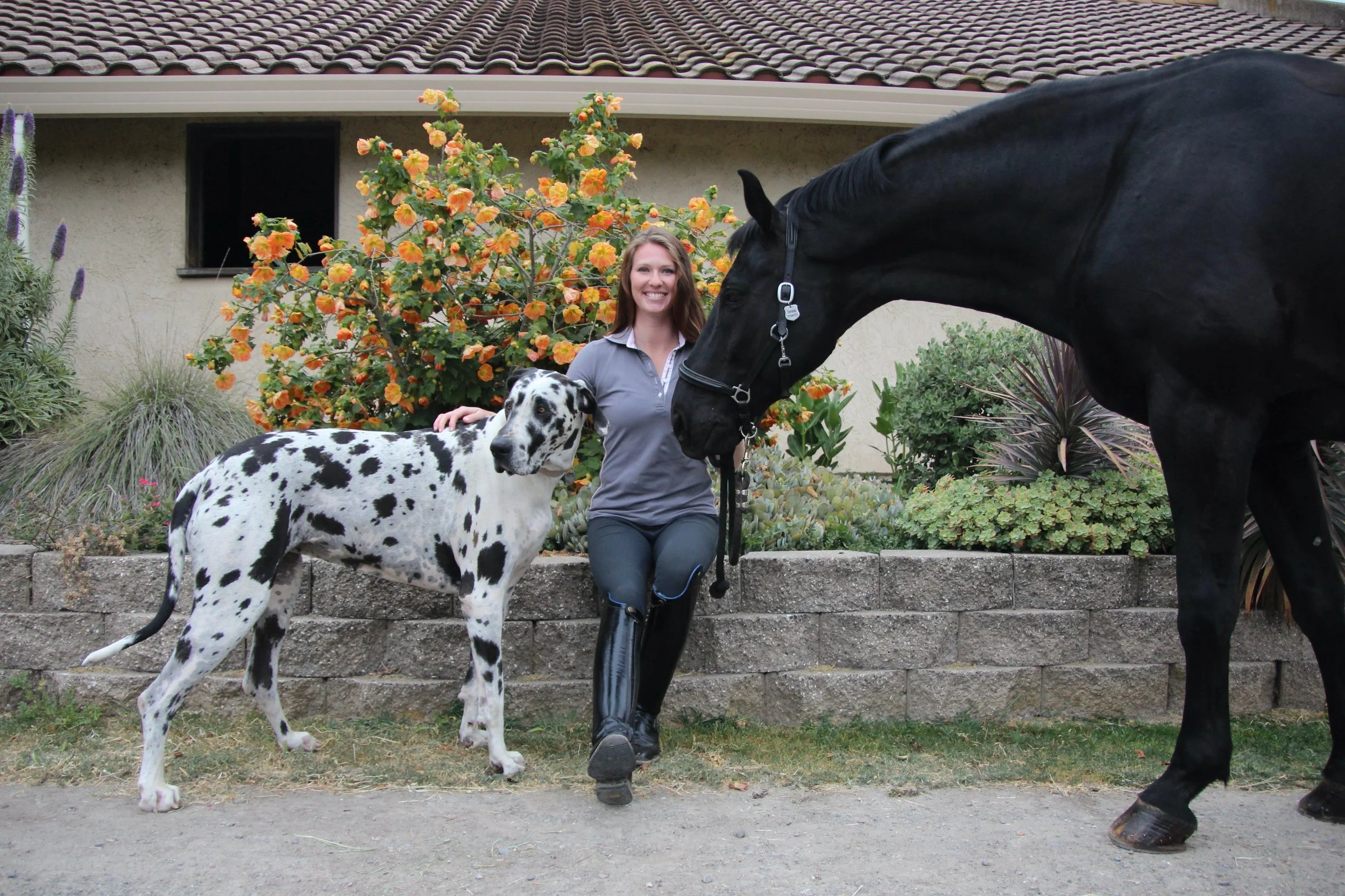
Choosing Dressage
I started riding at five years old after convincing my parents that I would agree to move from the East Bay to Sonoma County—but only if they let me take riding lessons.
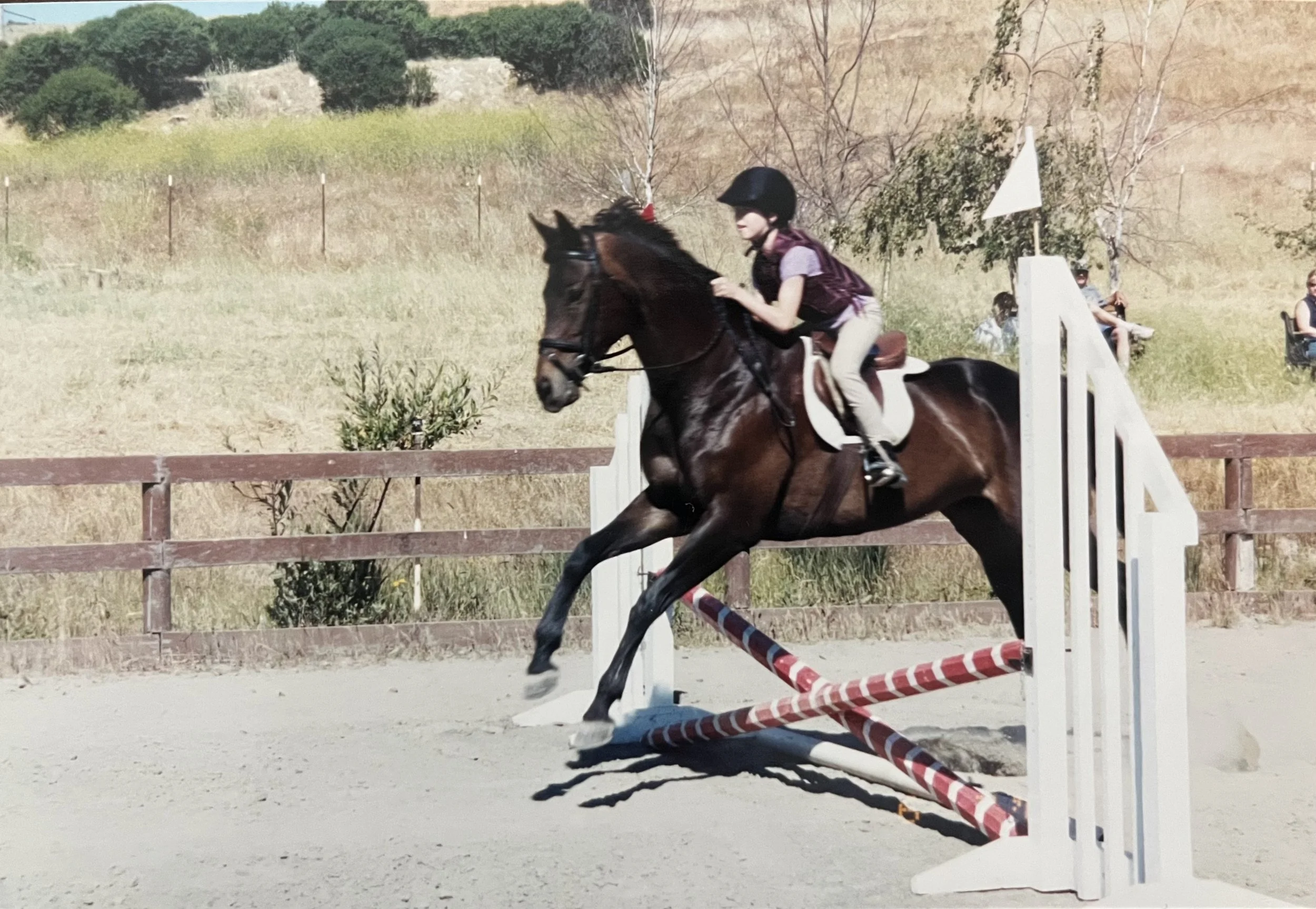
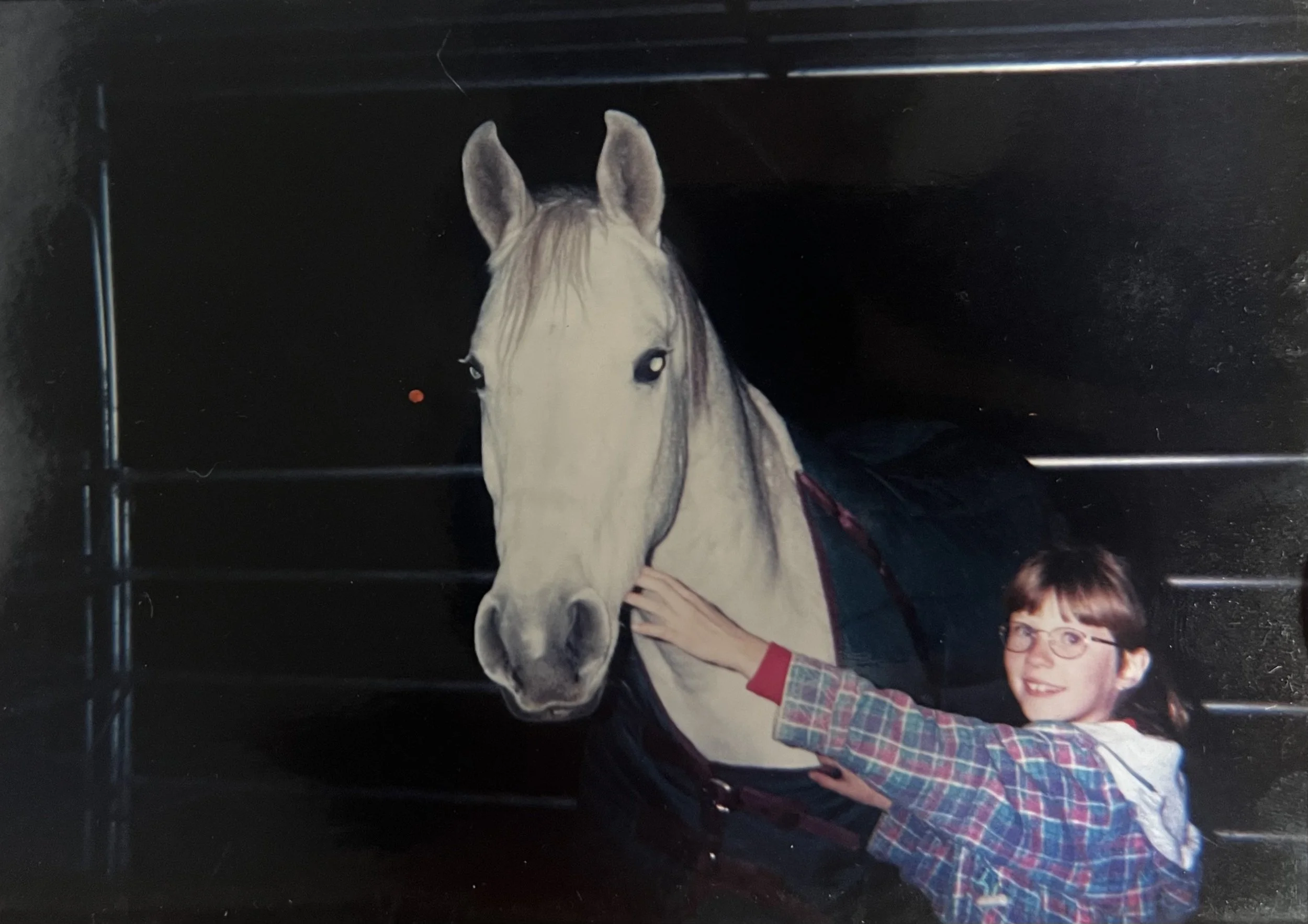
I was the kid who wanted to ride the ponies other kids struggled with and was always looking for the next challenge. By seven, I had my own pony, Shaw, and was learning the everyday responsibility of caring for horses at my aunt’s.
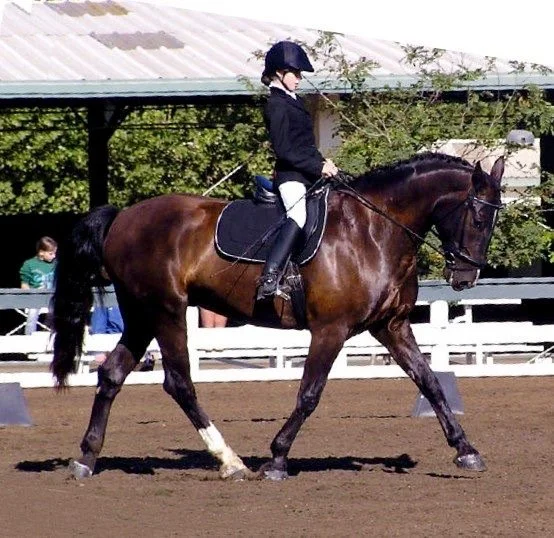
A few years later, I began eventing with my Thoroughbred mare, Tizzy. I loved jumping, and it came easily to me, but I found myself increasingly drawn to the challenge of dressage. There was always something to improve, something to understand more clearly, and another way to become a better rider. By eleven, I had decided that was where I wanted to focus, and Baby Boy, a young Clydesdale/Thoroughbred cross, became my first horse dedicated to dressage.
AN IMMERSIVE EDUCATION
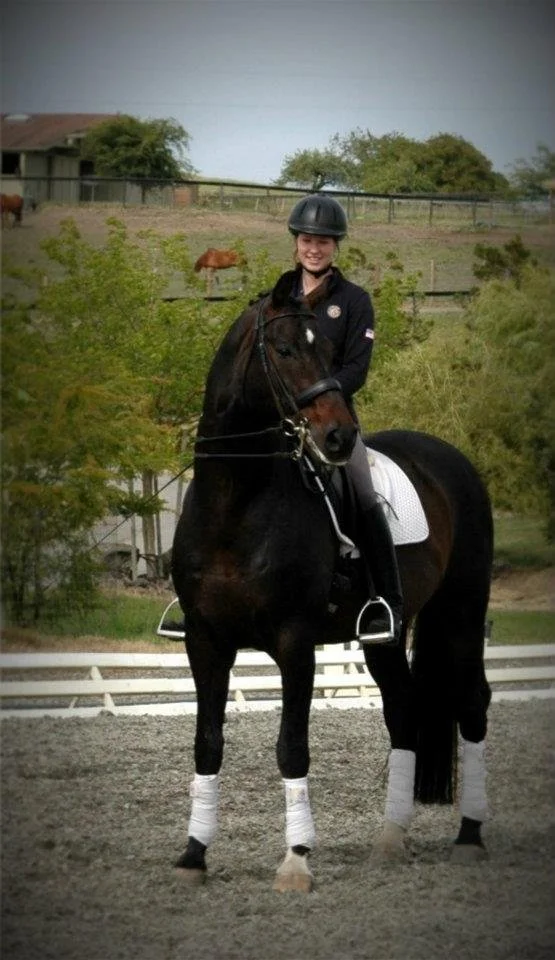
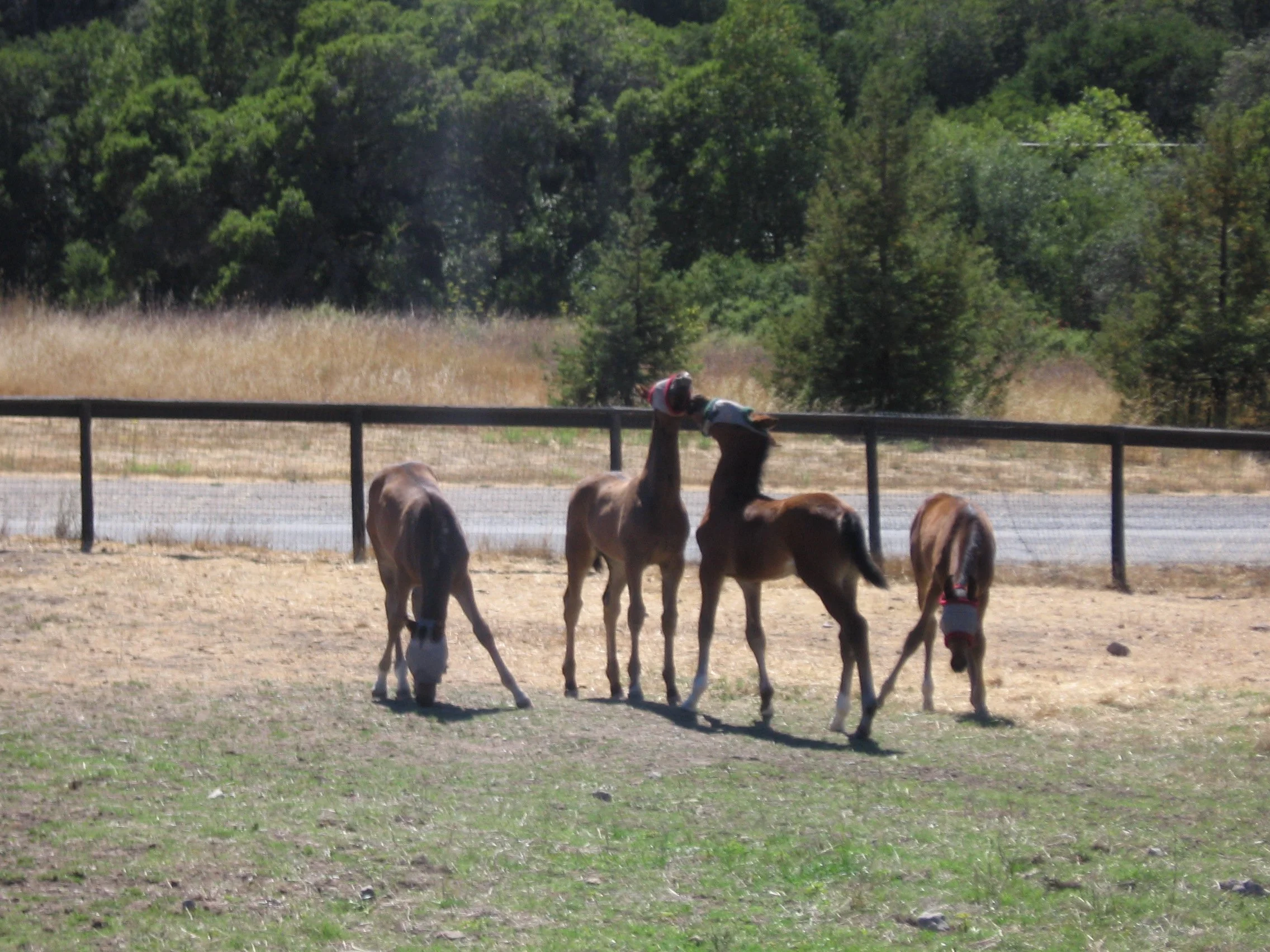
A few years later, I became a working student for Sue Curry Schaffer at Fairwind Farm in Santa Rosa, where I would spend much of my formative riding career.
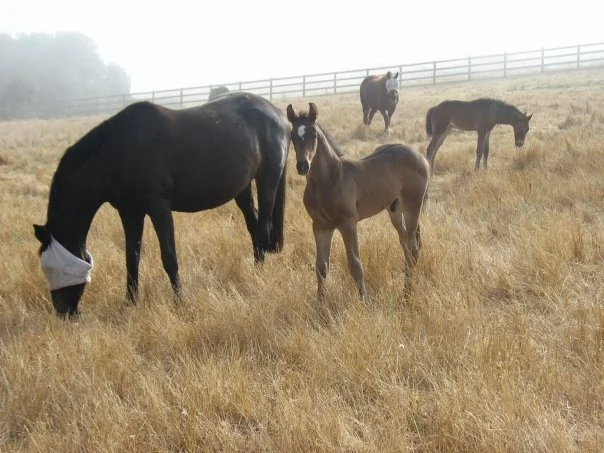
Fairwind gave me an unusually immersive education. I worked with young horses, rehabs, stallions, and experienced Grand Prix horses; handled foals; worked alongside veterinarians and farriers; and rode in clinics with accomplished trainers and judges.
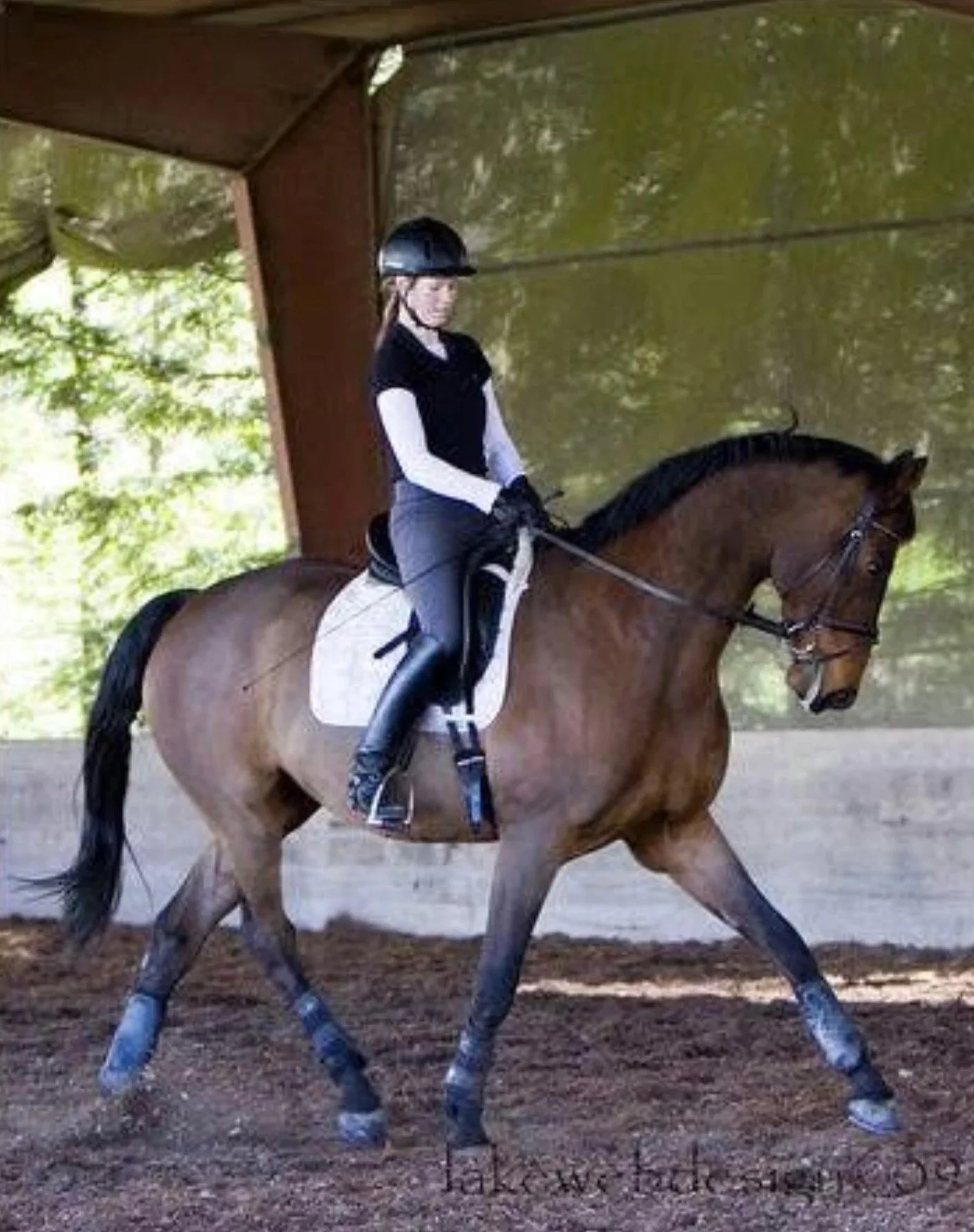
Outside the barn, I was just as curious. I spent countless hours studying horses, riders, competitions, and bloodlines on my own—building a visual library of what good dressage looked like and trying to understand why it worked.
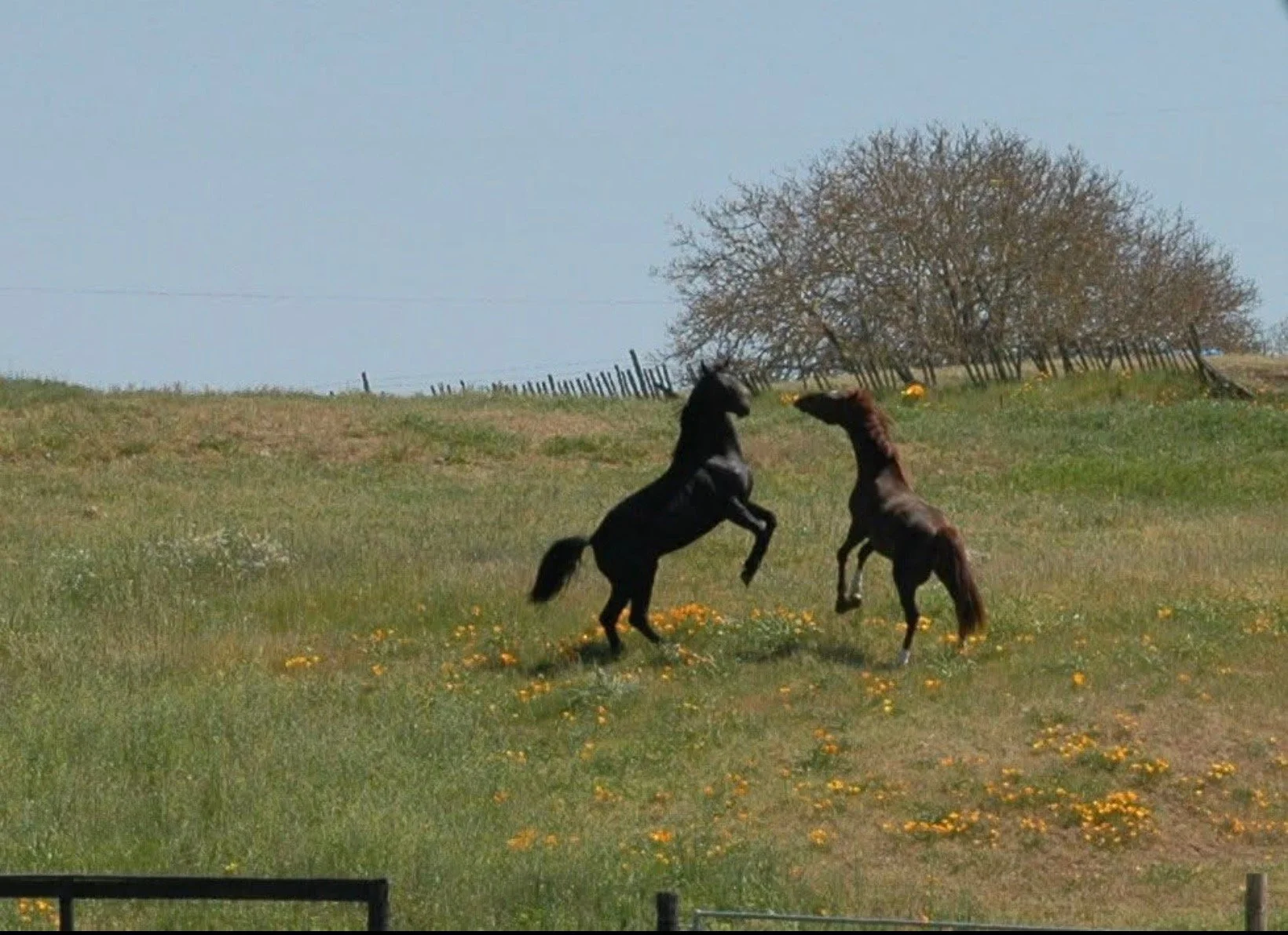
The experienced horses taught me what advanced dressage was supposed to feel like. The young and developing horses would eventually teach me how to create it.
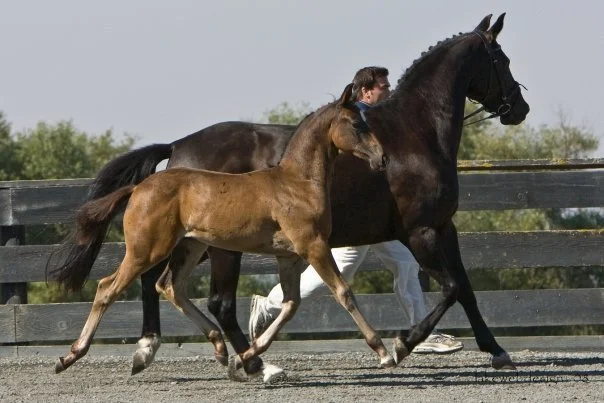
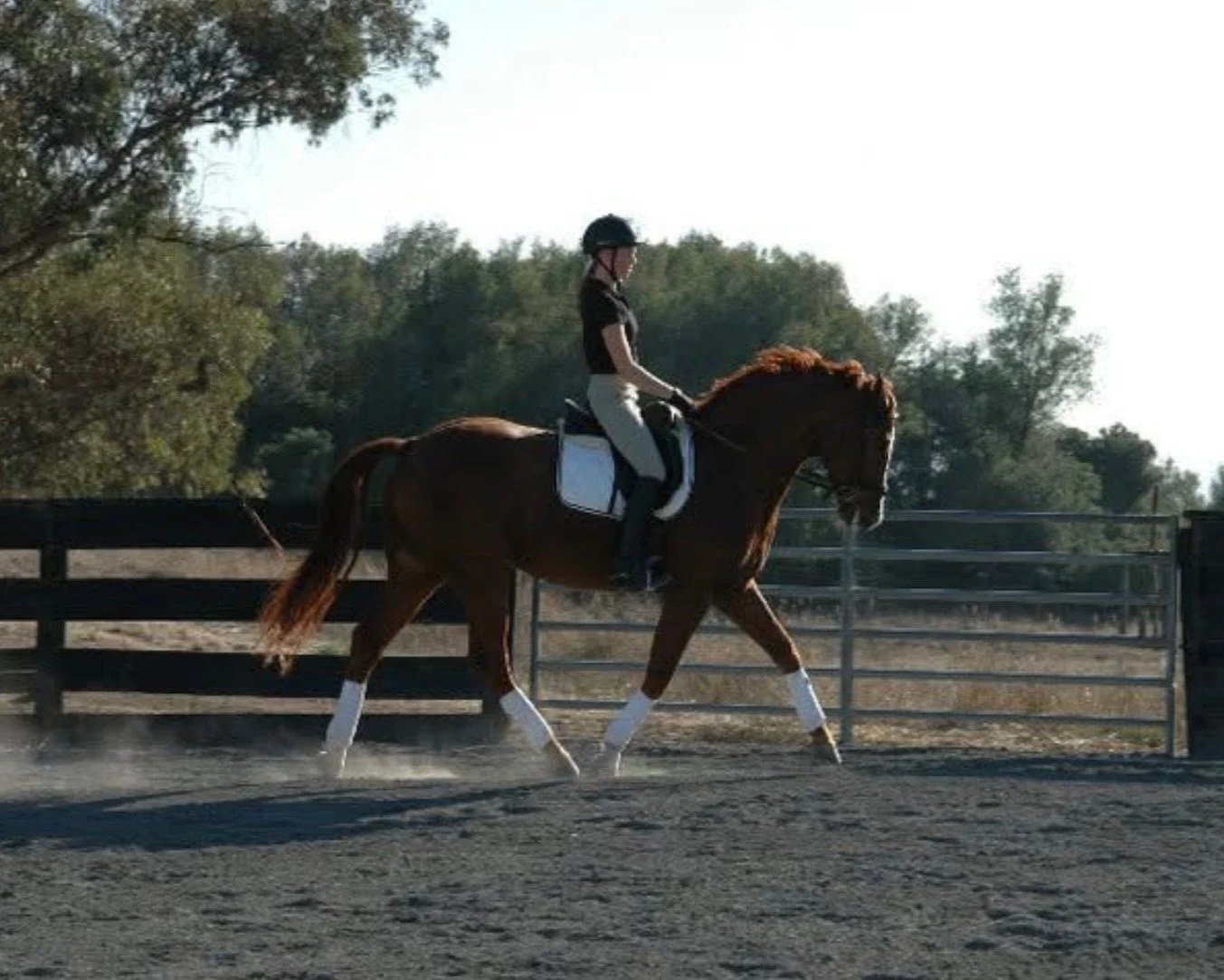
FROM RIDING THE MOVEMENTS TO DEVELOPING THEM
At 14, Romax came into my life and became the horse who would take me through my first FEI years. He was 12 years old, recovering from a suspensory injury, and roughly Second Level with green changes when our partnership began.
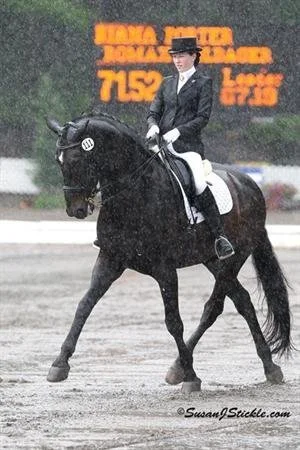
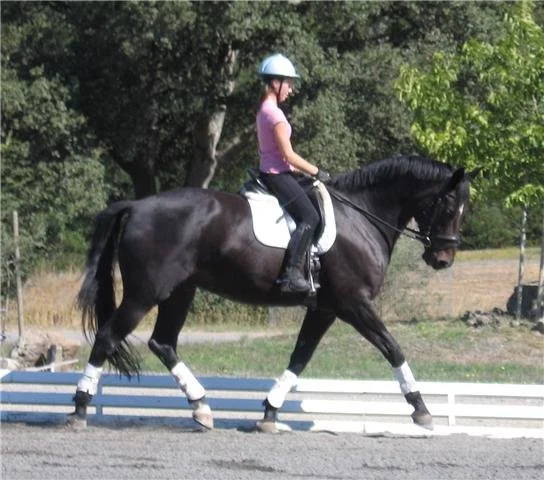
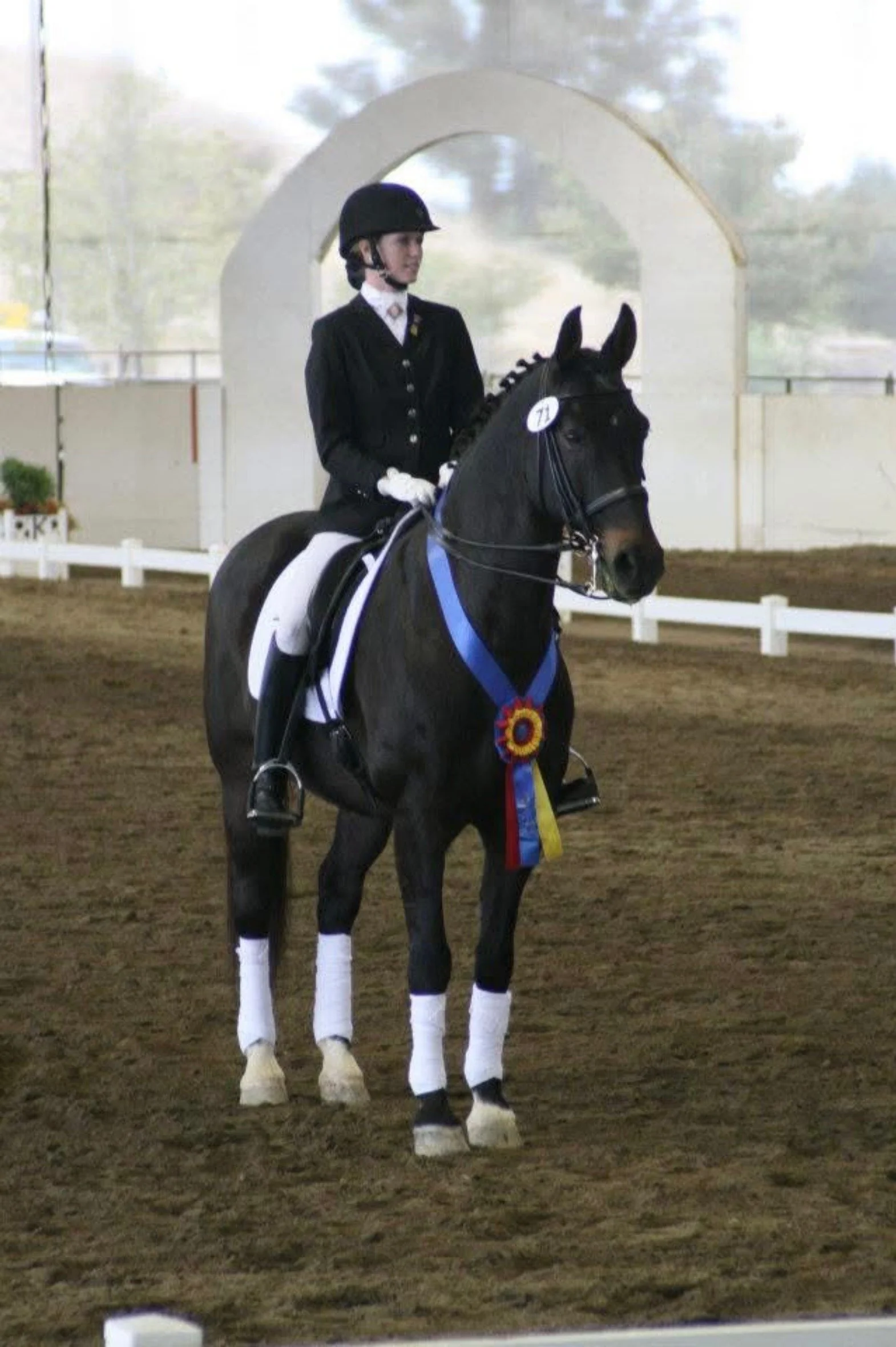
Together, we progressed into the FEI levels, winning the FEI Junior National Championship at the 2009 U.S. Dressage Festival of Champions, where the country’s top-qualified horse-and-rider combinations compete for national championship titles. We later returned to Festival of Champions as FEI Young Riders and earned another invitation at Small Tour, which we were unable to attend when Romax became mildly ill shortly before the competition.
Romax was the first horse I developed into the FEI levels, marking a shift from experiencing advanced work on established horses to taking a horse through that progression myself.
A Changing Role
In 2011, while competing Romax at the FEI Young Rider level, I was also campaigning Violet Jen’s experienced Grand Prix stallion Rubino Bellissimo at Prix St. Georges and Intermediate I.
After being seen riding Rubino, I was given the opportunity to spend a month as an auction rider at the Oldenburg auction in Vechta, Germany. At just 19 years old, I was assigned my own group of young horses to ride and prepare for presentation at the auction at the end of the month. I worked alongside five experienced auction riders, each responsible for their own group of horses, while being guided by Thomas Rhinow, the Oldenburg breed inspector who had brought me to Germany. The experience gave me a tremendous amount of exposure to developing and presenting young horses in a very short period of time.
I returned home from Vechta just as developing the young horses at Fairwind was becoming an increasingly significant part of my role there, a progression that would eventually lead me from working student into an assistant trainer role.
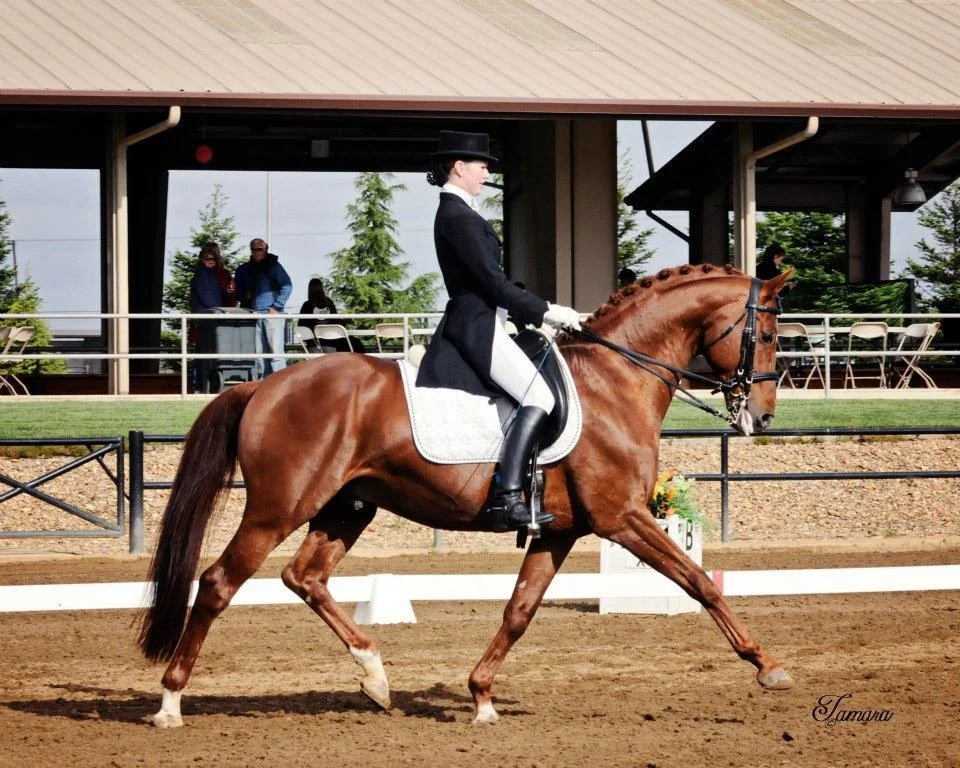
A PLACE TO BUILD
At 24, I wasn't setting out to open a training business. The opportunity came to me when Sandy Kriegsman, owner of Sanbar in Petaluma, reached out and took a chance on a young trainer who was still building her career.
What began with bringing a few horses and clients to Sanbar grew gradually. As my responsibilities and client base expanded, so did the opportunity Sandy had given me, and Sanbar became the place where I began building a program of my own.
Over the years, Sandy became much more than the owner of the barn where I trained. As I learned how to navigate the practical side of running a business of my own, she became an invaluable source of guidance and support while giving me the independence and space to grow into the trainer and business owner I was becoming.
A decade later, Sanbar remains home to Riana Porter Dressage.
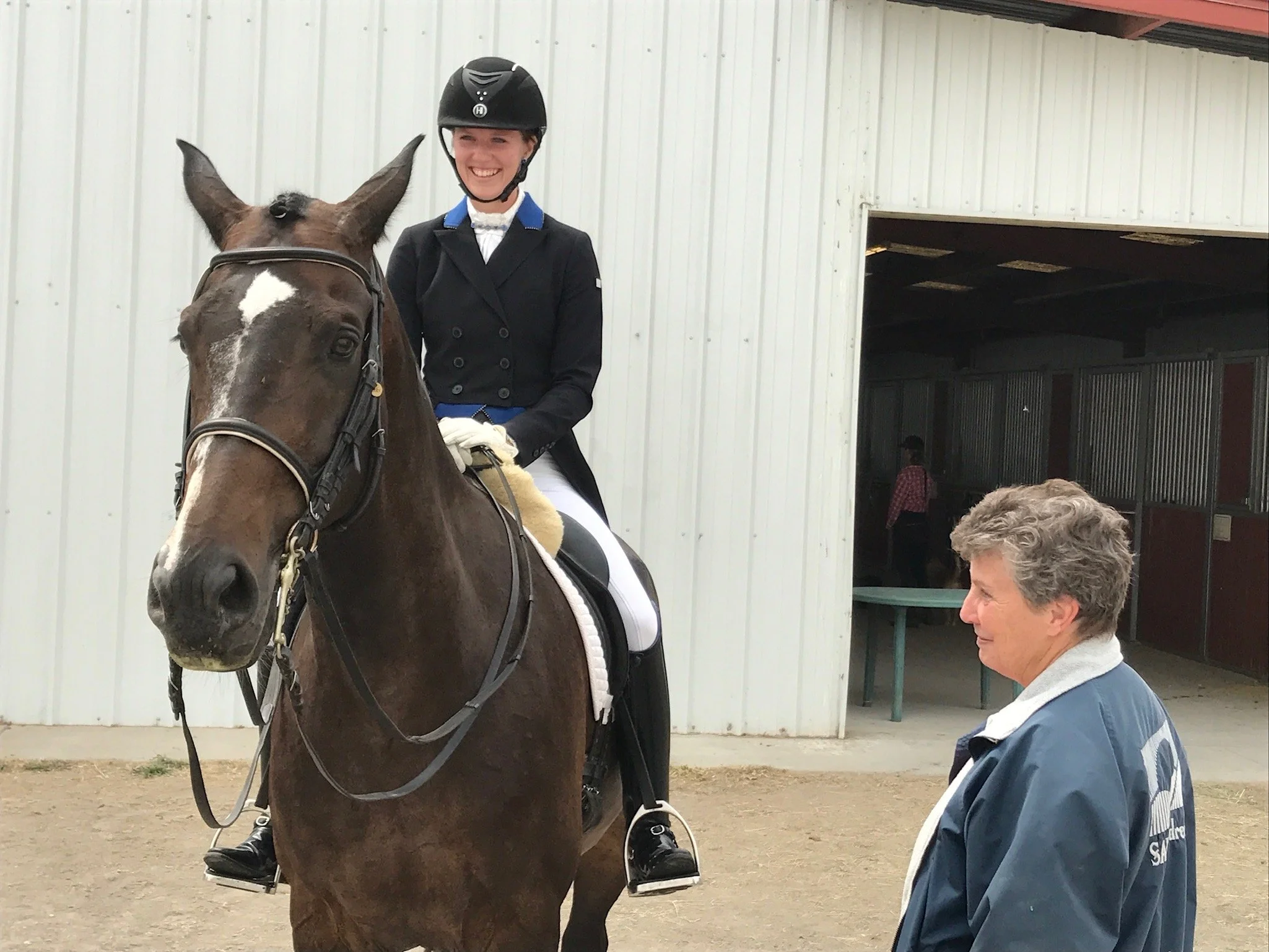
Riana with Sandy Kriegsman after competing Sandy’s horse Lancelot at PSG
BUILDING HORSES THROUGH THE LEVELS
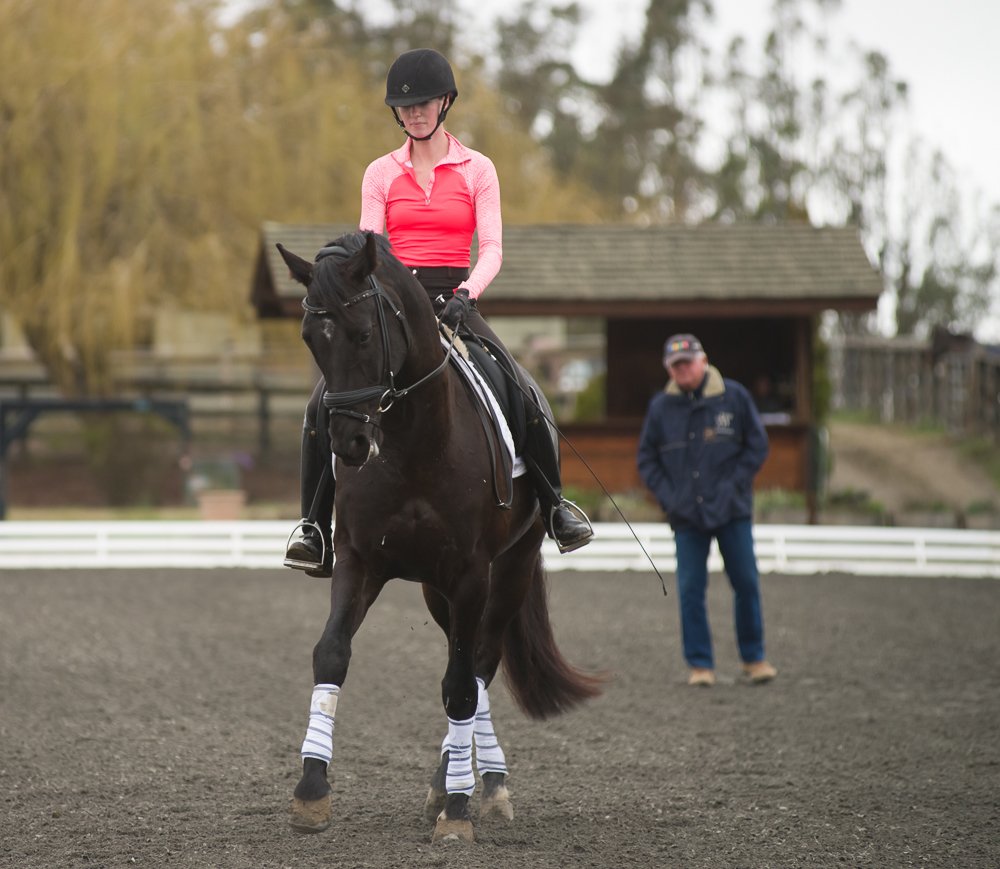
Riana & Dominus with Axel Steiner
The years that followed expanded my education in several directions. I continued riding and developing horses at many different stages while regularly riding in clinics with Axel Steiner, an Olympic and international dressage judge. Over the years, I rode more than a dozen different horses with Axel, ranging from young and developing horses to experienced Grand Prix horses. His perspective as an international judge gave me another way of looking at the work—not only how a horse performed a movement, but what the movement was designed to demonstrate, why the tests are structured the way they are, and what those tests reveal about the horse’s training to the judges eye.
Dominus and Dax were also becoming increasingly important parts of my own career. I had begun riding Dominus the year before Vechta, when he was a five-year-old working around Training Level, and began competing him at First Level in 2011. Dax came into my life around the same period, shortly after he was started under saddle. Both would become long-term development projects, although their paths would look very different.
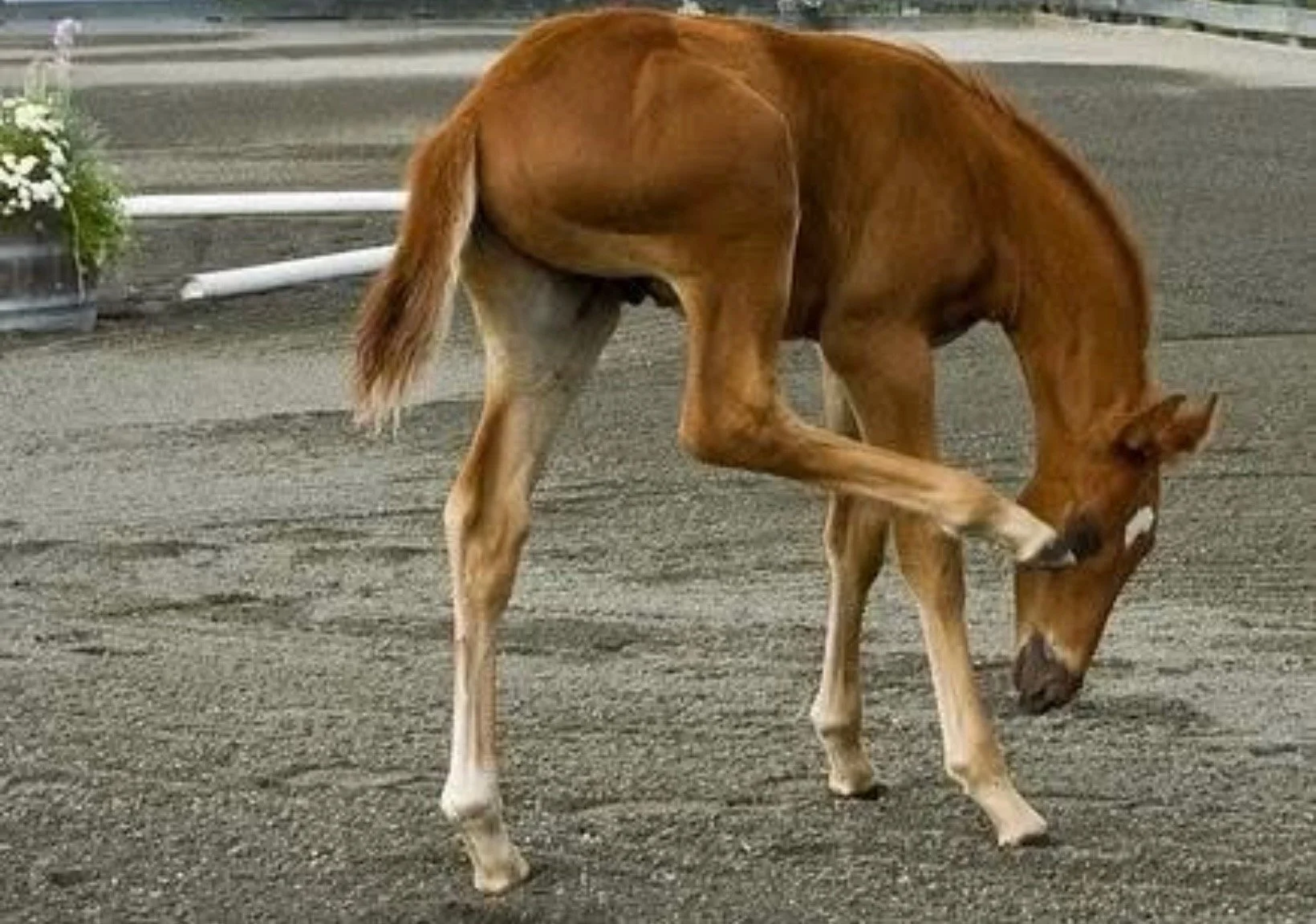
Dax had been part of my life long before he became one of my FEI horses—I had known him since he was just six hours old and began riding him shortly after he was started under saddle. As we progressed through the levels together, I began working regularly with Guenter Seidel, a three-time Olympic bronze medalist for the United States.
For several years, Guenter became an integral part of my education as a rider and trainer as I continued developing Dax and Dominus through the levels. His attention to rider position, body mechanics, timing, and clarity of the aids refined both my riding and the way I approached developing horses and riders through the upper levels.
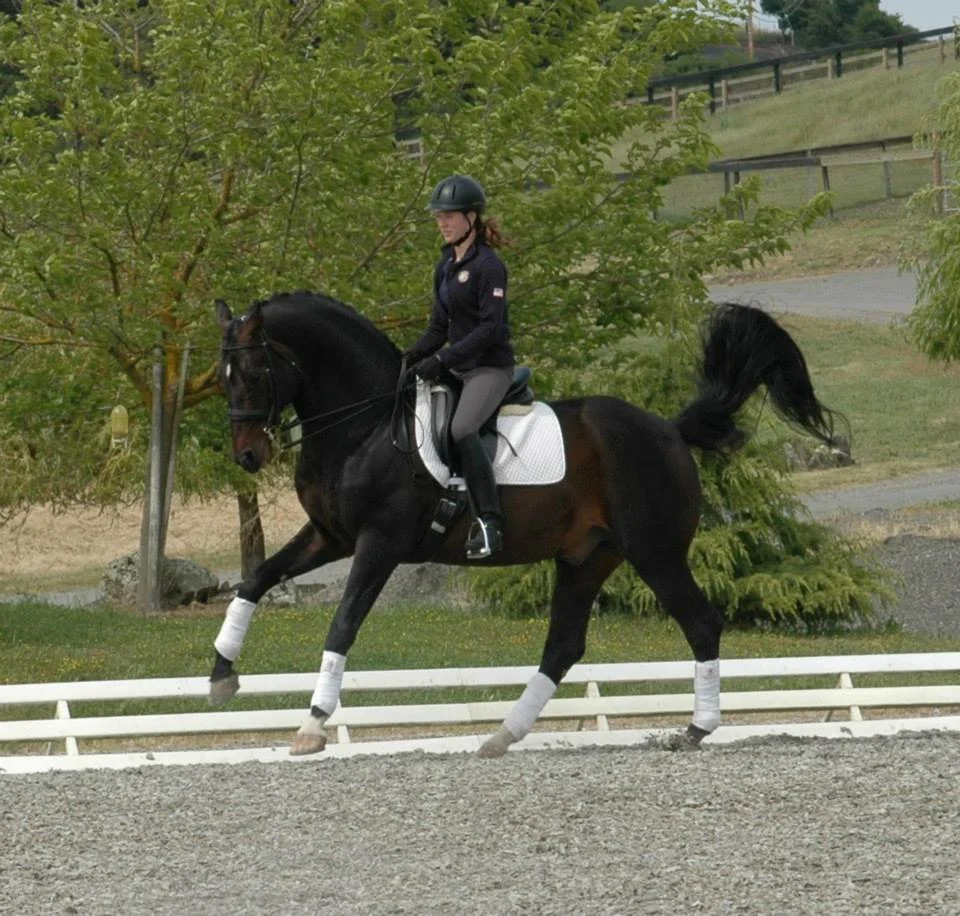
In 2017, at 25 and still early in my career as a developing professional, Dax and I were invited to compete at the U.S. Dressage Festival of Champions at Small Tour. It was my third appearance at the national championships—and my first with a horse I had developed from the beginning of his career.
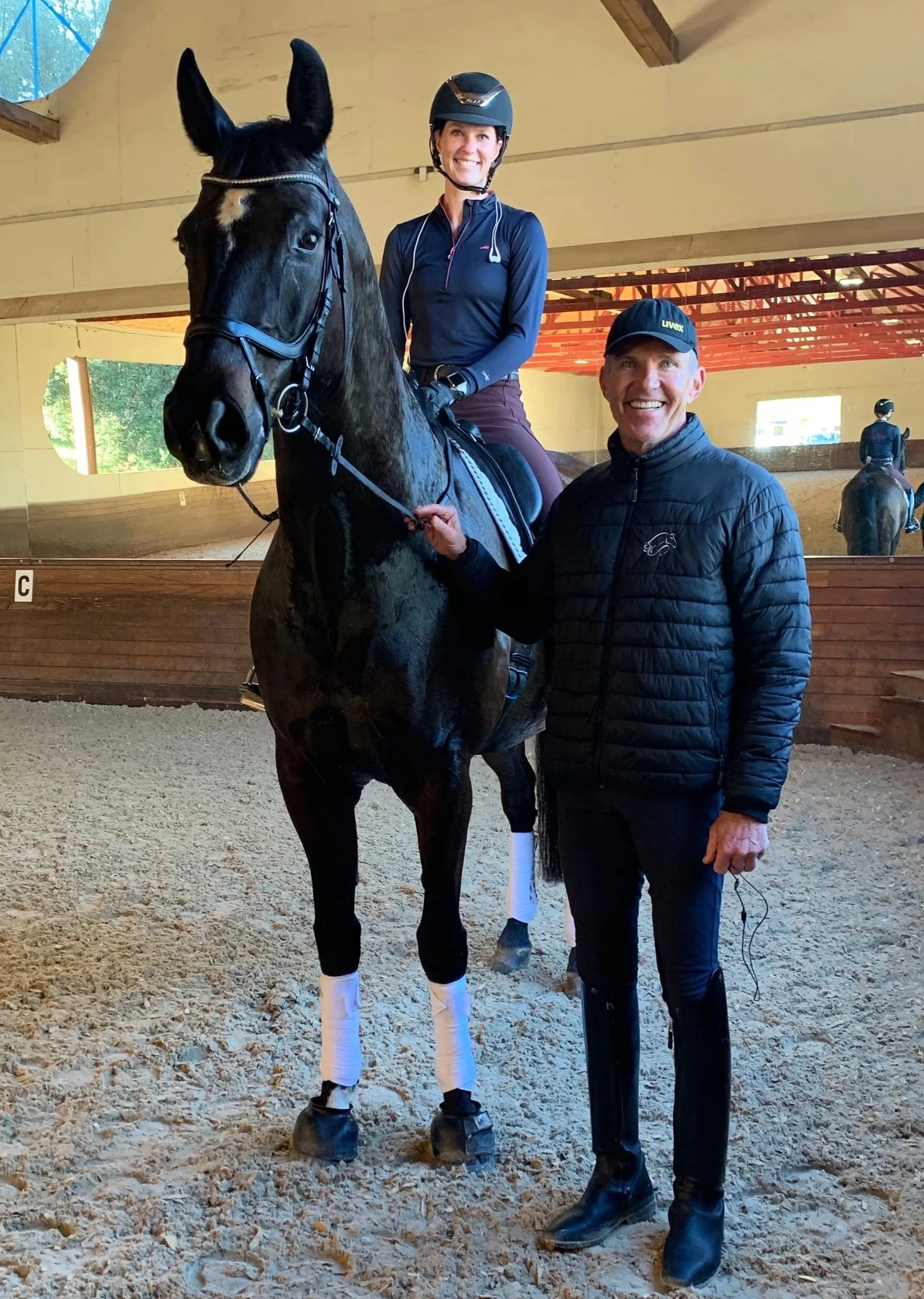
Riana & Dax with Guenter Seidel
DEVELOPING THROUGH GRAND PRIX
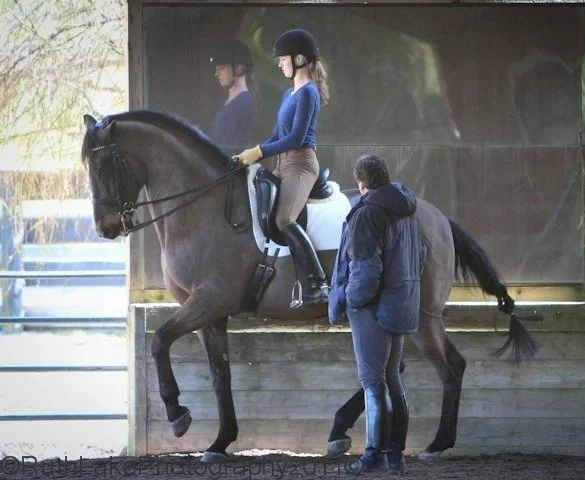
Riana & Romax working with Alfredo Hernandez
My first experience developing a horse toward Grand Prix began with Romax. After our Small Tour years, we continued toward U25 Grand Prix and were preparing for our first season at that level when he was diagnosed with ringbone, ending his competitive career before we had the opportunity to enter the arena at Grand Prix.
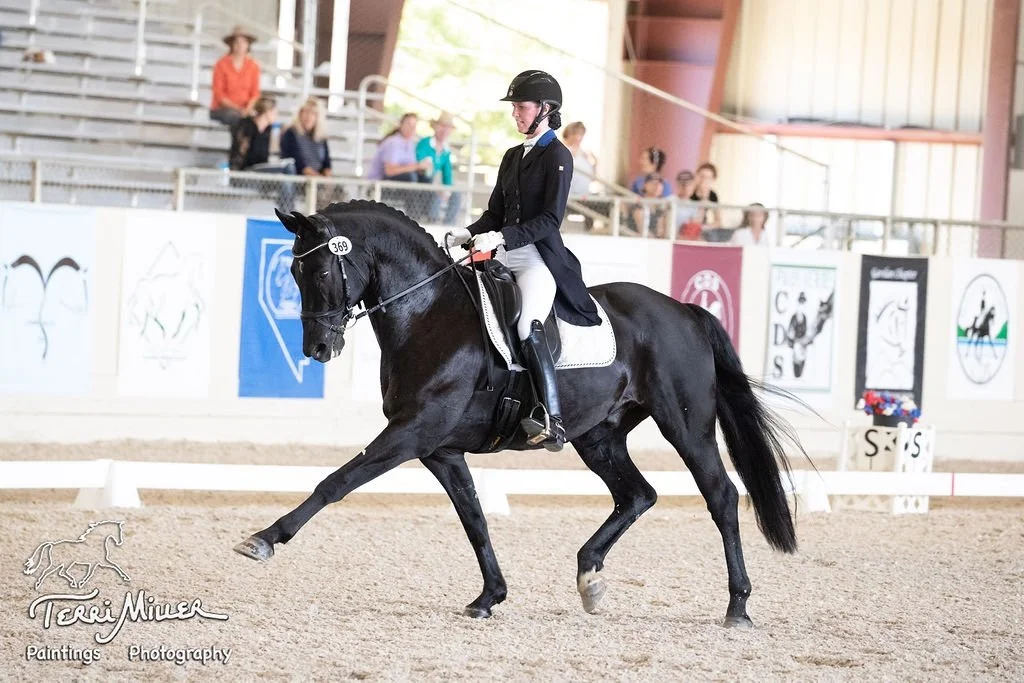
Dominus had been part of my development as a rider and trainer for years by then. I first began riding him as a young horse around Training Level and continued working with him through the early stages of his career into Third Level before he eventually moved to Southern California with his owner. When he returned to me in 2017, we picked up a very different journey together—this time working our way through the upper levels toward Grand Prix.
That progression was not always linear. Developing the strength, confidence, and understanding the Grand Prix work required sometimes meant going back to rebuild pieces of the training before we could move forward again.
In 2021, Dominus became the first horse I competed at Grand Prix and the horse on whom I earned my USDF Gold Medal.
THE WORK CONTINUES…
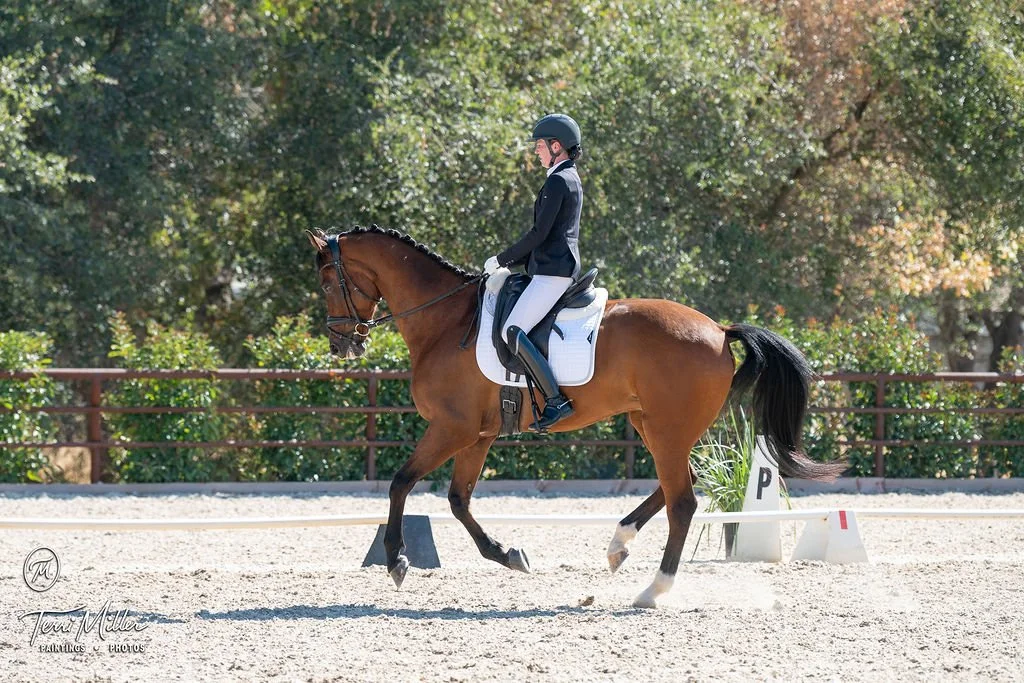
Today, I bring more than two decades of experience into my own program at Riana Porter Dressage, where I continue developing horses and riders through the levels while remaining actively involved in the development and competition of my own horses.
My own education remains an important part of that work. In recent years, I have continued riding with FEI 5* judge Mike Osinski, while seeking out opportunities that challenge my riding, refine my eye, and expand my understanding of the sport.
More than twenty years after I first chose dressage because there was always something more to learn, I still approach the sport with that same curiosity—always looking to understand more, refine the work, and continue developing as both a rider and trainer.